# 进程调度算法有哪些?适用场景是什么?
面试时没有回答好问题是很正常的,被面试官质疑时,要有今天不会明天会的底气,面后做好复盘,不在同一道题目上跌倒第二次,今天就从 C++中的inline函数 vs #define宏的区别 背起来
你对进程调度算法的了解有哪些?适用场景是什么?
# 简要回答
进程调度算法是操作系统决定哪个就绪进程获得CPU时间的方法。
主要分为非抢占式(FCFS、SJF)和抢占式(RR、优先级调度、多级队列)。
现代系统采用多级反馈队列(MLFQ)结合多种策略,平衡响应时间、吞吐量和公平性。
# 详细回答
- 调度算法分类体系:
批处理调度:FCFS、SJF、HRRN - 注重吞吐量
交互式调度:RR、优先级调度 - 注重响应时间
实时调度:EDF、RMS - 满足时间约束
混合调度:MLFQ - 自适应多种负载
- 关键调度指标:
周转时间:从提交到完成的总时间
响应时间:从提交到首次响应的时间
吞吐量:单位时间完成的进程数
公平性:各进程获得CPU时间的均衡度
CPU利用率:CPU忙碌时间的比例
调度算法就像不同的管理风格:
FCFS(先来先服务):排队文化,先到先得,简单公平但效率可能不高
SJF(短作业优先):效率优先,让耗时小的作业先执行,但可能饿死大作业
RR(时间片轮转):民主分配,每进程轮流用一会儿,保证响应速度
优先级调度:特权制度,重要任务优先,但要防止低优先级饿死
现代操作系统像经验丰富的项目经理,会根据任务特点动态调整策略。
# 进程调度算法特性比较表
| 调度算法 | 抢占性 | 公平性 | 响应时间 | 吞吐量 | 实现复杂度 | 主要特点 |
|---|---|---|---|---|---|---|
| FCFS (先来先服务) | 非抢占 | 高 | 差 | 中 | 低 | • 简单公平 • 可能产生 convoy 效应 • 对长作业有利 |
| SJF (短作业优先) | 非抢占 | 低 | 好 | 高 | 中 | • 最小化平均等待时间 • 可能饿死长作业 • 需要预知执行时间 |
| SRTF (最短剩余时间优先) | 抢占 | 低 | 很好 | 高 | 高 | • SJF的抢占式版本 • 响应时间优秀 • 实现复杂度高 |
| RR (时间片轮转) | 抢占 | 高 | 好 | 中 | 中 | • 公平性好 • 时间片大小影响性能 • 适合交互式系统 |
| 优先级调度 | 可选 | 低 | 好 | 高 | 中 | • 支持优先级区分 • 可能饿死低优先级 • 可配置抢占性 |
| MLFQ (多级反馈队列) | 抢占 | 中 | 很好 | 高 | 高 | • 自适应调度 • 平衡响应和吞吐 • 防止饿死机制 |
| CFS (完全公平调度) | 抢占 | 很高 | 很好 | 高 | 很高 | • 红黑树管理进程 • 基于vruntime • 高度公平性 |
# 代码示例
#include <iostream>
#include <vector>
#include <queue>
#include <algorithm>
#include <iomanip>

struct Process {
    int pid;           // 进程ID
    int arrival_time;  // 到达时间
    int burst_time;    // 执行时间
    int priority;      // 优先级(数字越小优先级越高)
    int remaining_time; // 剩余执行时间
    int start_time;    // 开始时间
    int completion_time; // 完成时间

    // 计算各种时间指标
    int getWaitingTime() const { return start_time - arrival_time; }
    int getTurnaroundTime() const { return completion_time - arrival_time; }
    int getResponseTime() const { return start_time - arrival_time; }
};

class Scheduler {
protected:
    std::vector<Process> processes;

public:
    void setProcesses(const std::vector<Process>& procs) {
        processes = procs;
    }

    virtual void schedule() = 0;

    void printResults() {
        std::cout << "\n调度结果:\n";
        std::cout << "PID\t到达\t执行\t开始\t完成\t等待\t周转\t响应\n";

        double total_waiting = 0, total_turnaround = 0, total_response = 0;

        for (const auto& p : processes) {
            std::cout << p.pid << "\t" << p.arrival_time << "\t"
                      << p.burst_time << "\t" << p.start_time << "\t"
                      << p.completion_time << "\t" << p.getWaitingTime() << "\t"
                      << p.getTurnaroundTime() << "\t" << p.getResponseTime() << "\n";

            total_waiting += p.getWaitingTime();
            total_turnaround += p.getTurnaroundTime();
            total_response += p.getResponseTime();
        }

        std::cout << "\n平均等待时间: " << total_waiting / processes.size() << "\n";
        std::cout << "平均周转时间: " << total_turnaround / processes.size() << "\n";
        std::cout << "平均响应时间: " << total_response / processes.size() << "\n";
    }
};

// 先来先服务调度
class FCFSScheduler : public Scheduler {
public:
    void schedule() override {
        std::vector<Process> sorted_procs = processes;
        std::sort(sorted_procs.begin(), sorted_procs.end(),
                 [](const Process& a, const Process& b) {
                     return a.arrival_time < b.arrival_time;
                 });

        int current_time = 0;
        for (auto& p : sorted_procs) {
            if (current_time < p.arrival_time) {
                current_time = p.arrival_time;
            }
            p.start_time = current_time;
            p.completion_time = current_time + p.burst_time;
            current_time = p.completion_time;
        }
        processes = sorted_procs;
    }
};

// 短作业优先调度(非抢占)
class SJFScheduler : public Scheduler {
public:
    void schedule() override {
        std::vector<Process> sorted_procs = processes;
        int current_time = 0;
        int completed = 0;
        int n = sorted_procs.size();

        std::vector<bool> completed_procs(n, false);

        while (completed < n) {
            int idx = -1;
            int min_burst = INT_MAX;

            // 找出已到达且剩余时间最短的进程
            for (int i = 0; i < n; i++) {
                if (!completed_procs[i] &&
                    sorted_procs[i].arrival_time <= current_time &&
                    sorted_procs[i].burst_time < min_burst) {
                    min_burst = sorted_procs[i].burst_time;
                    idx = i;
                }
            }

            if (idx != -1) {
                sorted_procs[idx].start_time = current_time;
                sorted_procs[idx].completion_time = current_time + sorted_procs[idx].burst_time;
                current_time = sorted_procs[idx].completion_time;
                completed_procs[idx] = true;
                completed++;
            } else {
                current_time++;
            }
        }
        processes = sorted_procs;
    }
};

// 时间片轮转调度
class RRScheduler : public Scheduler {
private:
    int time_quantum;

public:
    RRScheduler(int quantum) : time_quantum(quantum) {}

    void schedule() override {
        std::queue<int> ready_queue;
        std::vector<int> remaining_time;
        std::vector<bool> in_queue;

        // 初始化
        for (const auto& p : processes) {
            remaining_time.push_back(p.burst_time);
            in_queue.push_back(false);
        }

        // 按到达时间排序的进程索引
        std::vector<int> indices(processes.size());
        for (int i = 0; i < processes.size(); i++) indices[i] = i;
        std::sort(indices.begin(), indices.end(), [this](int a, int b) {
            return processes[a].arrival_time < processes[b].arrival_time;
        });

        int current_time = 0;
        int completed = 0;
        int next_proc = 0;

        // 初始化第一个进程
        if (!indices.empty()) {
            ready_queue.push(indices[0]);
            in_queue[indices[0]] = true;
            next_proc = 1;
        }

        while (completed < processes.size()) {
            if (ready_queue.empty()) {
                current_time++;
                // 检查是否有新进程到达
                while (next_proc < processes.size() &&
                       processes[indices[next_proc]].arrival_time <= current_time) {
                    ready_queue.push(indices[next_proc]);
                    in_queue[indices[next_proc]] = true;
                    next_proc++;
                }
                continue;
            }

            int current_idx = ready_queue.front();
            ready_queue.pop();

            Process& current_proc = processes[current_idx];

            // 设置开始时间(如果是第一次执行)
            if (remaining_time[current_idx] == current_proc.burst_time) {
                current_proc.start_time = current_time;
            }

            // 执行一个时间片或剩余时间
            int execution_time = std::min(time_quantum, remaining_time[current_idx]);
            remaining_time[current_idx] -= execution_time;
            current_time += execution_time;

            // 检查新到达的进程
            while (next_proc < processes.size() &&
                   processes[indices[next_proc]].arrival_time <= current_time) {
                if (!in_queue[indices[next_proc]]) {
                    ready_queue.push(indices[next_proc]);
                    in_queue[indices[next_proc]] = true;
                }
                next_proc++;
            }

            // 如果进程未完成,重新加入队列
            if (remaining_time[current_idx] > 0) {
                ready_queue.push(current_idx);
            } else {
                current_proc.completion_time = current_time;
                completed++;
            }
        }
    }
};

// 优先级调度(抢占式)
class PriorityScheduler : public Scheduler {
public:
    void schedule() override {
        auto compare = [](const Process* a, const Process* b) {
            return a->priority > b->priority; // 优先级数字小的优先
        };
        std::priority_queue<Process*, std::vector<Process*>, decltype(compare)> pq(compare);

        std::vector<Process> sorted_procs = processes;
        std::sort(sorted_procs.begin(), sorted_procs.end(),
                 [](const Process& a, const Process& b) {
                     return a.arrival_time < b.arrival_time;
                 });

        std::vector<int> remaining_time;
        for (const auto& p : sorted_procs) {
            remaining_time.push_back(p.burst_time);
        }

        int current_time = 0;
        int completed = 0;
        int n = sorted_procs.size();
        int next_proc = 0;

        Process* current_process = nullptr;
        int current_start = -1;

        while (completed < n) {
            // 将到达的进程加入队列
            while (next_proc < n && sorted_procs[next_proc].arrival_time <= current_time) {
                pq.push(&sorted_procs[next_proc]);
                next_proc++;
            }

            if (!pq.empty()) {
                Process* highest_priority = pq.top();
                pq.pop();

                if (current_process != highest_priority) {
                    if (current_process != nullptr) {
                        // 保存当前进程的执行进度
                        pq.push(current_process);
                    }
                    current_process = highest_priority;
                    if (remaining_time[current_process->pid] == current_process->burst_time) {
                        current_process->start_time = current_time;
                    }
                    current_start = current_time;
                }

                // 执行一个时间单位
                remaining_time[current_process->pid]--;
                current_time++;

                if (remaining_time[current_process->pid] == 0) {
                    current_process->completion_time = current_time;
                    completed++;
                    current_process = nullptr;
                }
            } else {
                current_time++;
            }
        }
        processes = sorted_procs;
    }
};

int main() {
    // 创建测试进程集
    std::vector<Process> processes = {
        {0, 0, 5, 2},  // PID, 到达时间, 执行时间, 优先级
        {1, 1, 3, 1},
        {2, 2, 8, 3},
        {3, 3, 6, 2}
    };

    std::cout << "=== 进程调度算法比较 ===\n";

    // FCFS调度
    FCFSScheduler fcfs;
    fcfs.setProcesses(processes);
    fcfs.schedule();
    std::cout << "\n1. 先来先服务调度 (FCFS):";
    fcfs.printResults();

    // SJF调度
    SJFScheduler sjf;
    sjf.setProcesses(processes);
    sjf.schedule();
    std::cout << "\n2. 短作业优先调度 (SJF):";
    sjf.printResults();

    // RR调度
    RRScheduler rr(2); // 时间片=2
    rr.setProcesses(processes);
    rr.schedule();
    std::cout << "\n3. 时间片轮转调度 (RR, 时间片=2):";
    rr.printResults();

    // 优先级调度
    PriorityScheduler priority;
    priority.setProcesses(processes);
    priority.schedule();
    std::cout << "\n4. 优先级调度:";
    priority.printResults();

    return 0;
}
2
3
4
5
6
7
8
9
10
11
12
13
14
15
16
17
18
19
20
21
22
23
24
25
26
27
28
29
30
31
32
33
34
35
36
37
38
39
40
41
42
43
44
45
46
47
48
49
50
51
52
53
54
55
56
57
58
59
60
61
62
63
64
65
66
67
68
69
70
71
72
73
74
75
76
77
78
79
80
81
82
83
84
85
86
87
88
89
90
91
92
93
94
95
96
97
98
99
100
101
102
103
104
105
106
107
108
109
110
111
112
113
114
115
116
117
118
119
120
121
122
123
124
125
126
127
128
129
130
131
132
133
134
135
136
137
138
139
140
141
142
143
144
145
146
147
148
149
150
151
152
153
154
155
156
157
158
159
160
161
162
163
164
165
166
167
168
169
170
171
172
173
174
175
176
177
178
179
180
181
182
183
184
185
186
187
188
189
190
191
192
193
194
195
196
197
198
199
200
201
202
203
204
205
206
207
208
209
210
211
212
213
214
215
216
217
218
219
220
221
222
223
224
225
226
227
228
229
230
231
232
233
234
235
236
237
238
239
240
241
242
243
244
245
246
247
248
249
250
251
252
253
254
255
256
257
258
259
260
261
262
263
264
265
266
267
268
269
270
271
272
273
274
275
276
277
278
279
280
281
282
283
284
285
286
287
288
289
290
291
292
293
294
295
296
297
298
299
300
301
302
303
304
305
306
307
308
309
310
311
312
# 知识拓展
- 各种调度算法的典型应用场景
FCFS适用场景: 批处理系统, 简单的嵌入式系统, 教学演示环境, 负载极轻的服务器
SJF/SRTF适用场景: 已知作业长度的批处理, 科学计算任务调度, 编译服务器, 需要最小化平均等待时间的场景
RR适用场景: 分时操作系统, 交互式系统(桌面、服务器), 需要公平性的多用户环境, 实时性要求不高的通用系统
优先级调度适用场景: 实时系统, 关键任务系统, 有明确优先级区分的应用, 操作系统内核任务调度
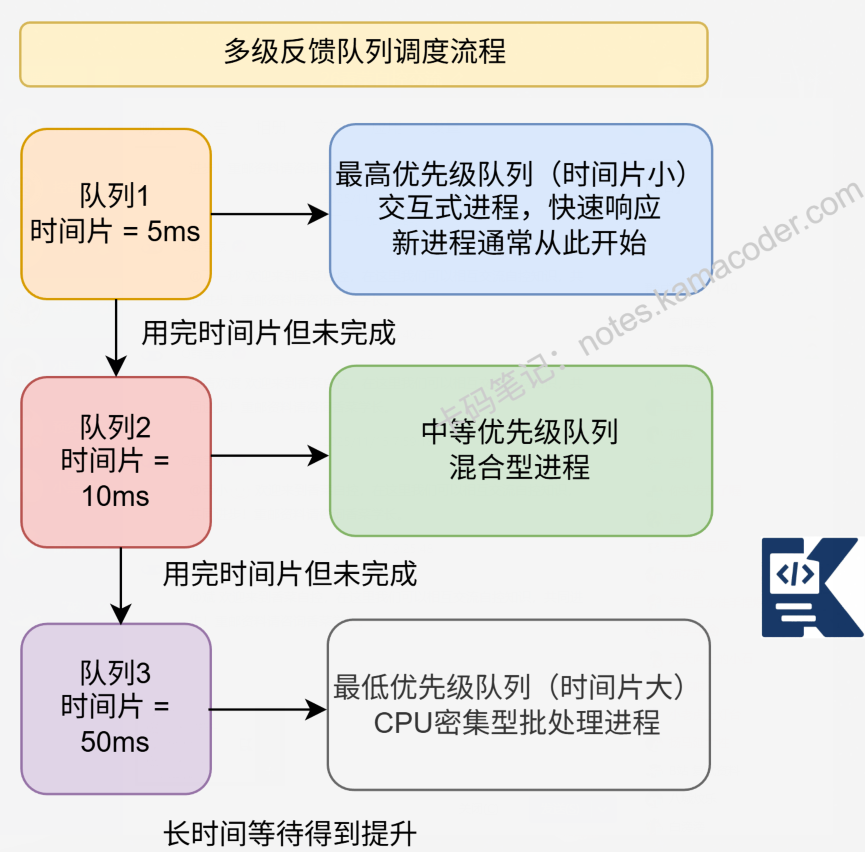
MLFQ适用场景: 现代通用操作系统(Windows、macOS的某些版本), 混合型工作负载(交互式+批处理), 需要平衡响应时间和吞吐量的系统
CFS适用场景: Linux桌面和服务器系统, 需要高度公平性的环境, 虚拟化环境, 多核处理器系统
- 知识图解
- 面试官很能追问
Q1: 什么是 convoy效应?如何避免?
A1: Convoy效应是指一个长进程阻塞了后面多个短进程的执行。
表现:短进程需要等待长进程完成,导致平均等待时间增加
原因:FCFS调度算法对长进程友好,对短进程不利
避免方法:使用抢占式调度(如RR、SRTF)或设置最大执行时间限制
Q2: 多级反馈队列如何防止进程饿死?
A2: MLFQ通过以下机制防止饿死:
优先级提升:低优先级进程等待一定时间后提升到高优先级队列
时间片调整:低优先级队列使用更大的时间片,保证获得足够的CPU时间
周期重置:定期将所有进程移回最高优先级队列,重置调度历史
Q3: 实时调度中EDF和RMS的区别是什么?
A3: 主要区别:
EDF(最早截止时间优先):动态优先级,选择绝对截止时间最早的任务
RMS(速率单调调度):静态优先级,周期越短的任务优先级越高
可调度性:RMS有固定的CPU利用率上限(69%),EDF可达100%
适用性:RMS适合固定周期任务,EDF适合动态周期任务
评论
验证登录状态...